How to read tricky road sign questions (with examples)

Why sign questions trip people up
Road-sign questions look like free points – until the test shows you two signs that are almost identical and four answers that all sound plausible. Most missed sign questions come down to one thing: people memorize pictures instead of the system behind them.
The good news is that US road signs follow strict rules of shape and color. Once you know the system, you can answer questions about signs you have never even seen. You can review the full set on our All Road Signs guide any time.
Decode the color first
Color is the fastest clue. Red always means stop, yield, or prohibition. Yellow warns you about the road ahead. Orange is temporary – construction and work zones. Green guides you (directions and distances), blue points to services, and brown marks parks and recreation areas.
-
STOP, YIELD, DO NOT ENTER, WRONG WAY. If the answer option describes something you are allowed to do, it is probably wrong.
-
Curves, intersections, pedestrians, animals. Warning signs never order you to do anything – they tell you what to expect.
-
Speed limits, lane usage, turn restrictions. White regulatory signs are laws, not suggestions.
Then check the shape
Shapes are reserved: only a STOP sign is an octagon, only a YIELD sign is a downward triangle, and the round shape is reserved for railroad warnings. A diamond always warns, a pentagon means a school zone, and a pennant on the right side of the road marks a no-passing zone.
If a question asks “What does this shape alone tell you?” – that is the whole point. You are supposed to recognize an octagon from the back or in heavy snow.
Example 1: the winding road trap

A yellow diamond with an S-shaped arrow means a winding road – a series of curves ahead, usually three or more. The trap answers will say “sharp curve ahead” (that is a different sign with a single 90° arrow) or “slippery road” (that sign shows a car with skid marks). Count the curves in the arrow: several bends = winding road.
Example 2: permission vs. prohibition
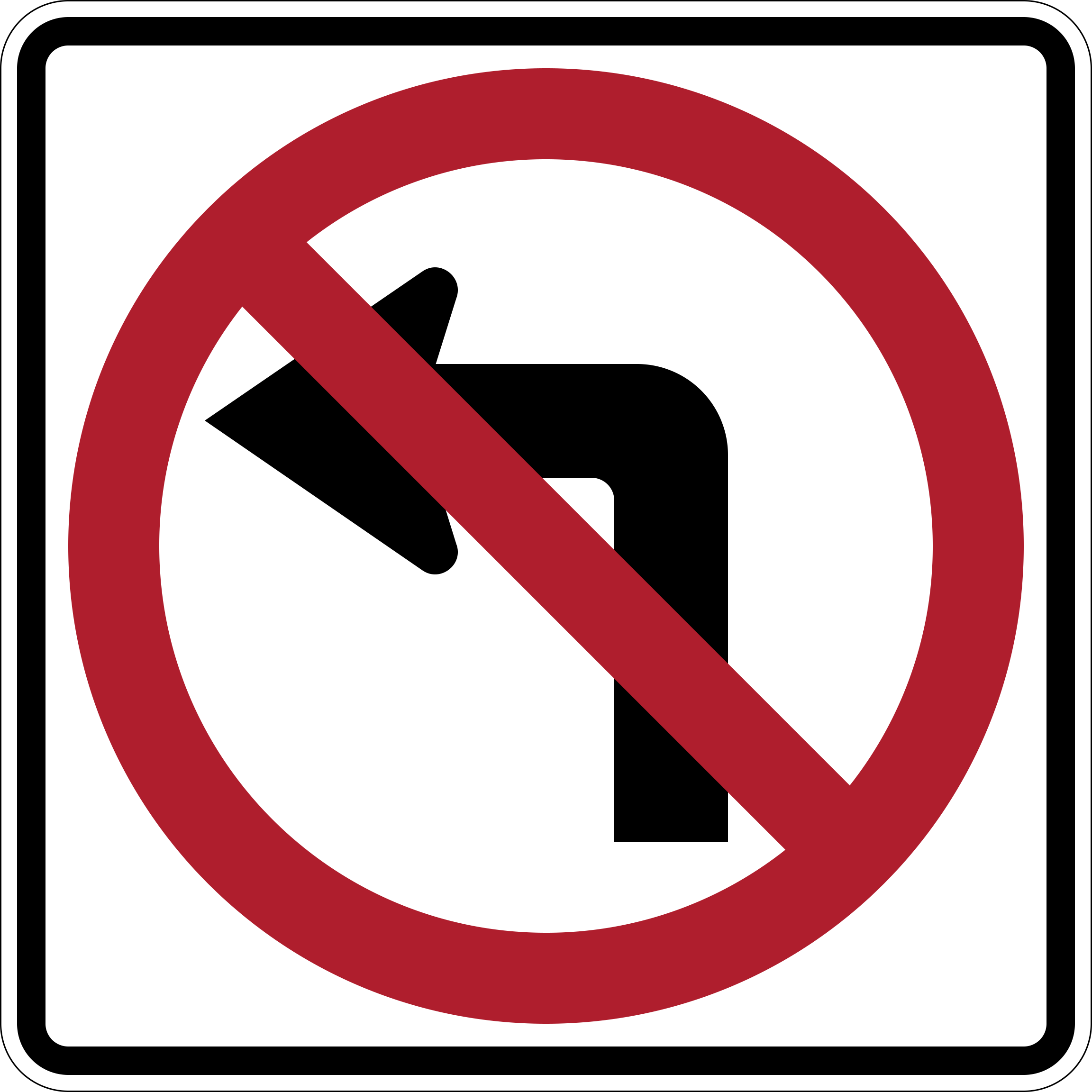
A red circle with a slash always prohibits the movement shown. This sign means no left turn – ever, not “left turn allowed when clear.” When an answer says “you may turn if traffic allows,” check whether the sign has the red slash. If it does, the movement is simply illegal.
How the test words its traps
-
Absolute wording is often correct for regulatory signs (red/white) and often wrong for warning signs (yellow), which describe conditions, not rules.
-
Merge vs. lane-ends, crossroad vs. side road, divided highway begins vs. ends. Slow down and look at the arrow direction – that is usually the entire difference.
-
The answer is an action, not a definition. For a school zone sign the correct choice is “slow down and watch for children,” not “this marks a school zone.”
Practice with the real thing
Every state test pulls sign questions from the same federal MUTCD standard, so sign practice transfers perfectly between states. Take a signs-only practice test for your state, then review any misses in your Fix It Bank until the shapes and colors are automatic.
Related posts: