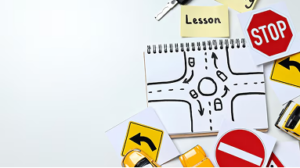
The best way to mix practice tests and real driving

Theory and wheel time are different muscles
Practice tests teach you what the law expects; real driving teaches your hands and eyes to deliver it. People who only grind practice questions pass the knowledge test and then freeze at a four-way stop. People who only drive with a parent develop confident habits – some of them illegal. You need both, and the order matters less than the mix.
The 1:1 rule that actually works
For every hour behind the wheel, spend roughly twenty minutes on targeted practice questions the same day. Not random questions – questions about what you just drove. Practiced unprotected left turns today? Do the right-of-way test tonight while the situations are fresh. The pairing turns abstract rules into pictures of intersections you were just sitting in.
Match topics to drives
-
Slow streets are full of regulatory signs. Quiz yourself on every sign you passed, then run a signs practice test.
-
After your first on-ramp, the passing and lane-discipline questions stop being theoretical.
-
Headlight rules, when to dim, and stretched following distances make sense the same evening you needed them.
Use mistakes as a steering wheel
Your missed questions are a map of what to practice in the car. Miss two questions about backing and parking? That is Saturday’s empty-parking-lot session. On DMVPrepNow every wrong answer lands in your Fix It Bank automatically, so your weak-topic list builds itself while you study.
A two-week sample plan
Week one: three short drives (residential, parking practice, easy arterials) plus the matching topic tests, fifteen to twenty minutes each evening. Week two: two longer drives that include a highway stretch and night driving, one full-length practice exam mid-week, and a Fix It Bank cleanup session. Finish with one timed exam-mode run – if you clear your state’s passing score with room to spare, you are ready to book the real test.
Related posts: